Why Modern Homeowners Are Rethinking Their Approach to Heating and Cooling
Most homes are built around a heating and cooling system best described as outdated. One thermostat, one oversized heating source, and one oversized air conditioner all on a schedule that rarely considers if the house is actually being used makes for a massively energy-wasting scenario that homeowners are smart to move away from. The change to more efficient systems is not represented in an increase in products, but rather a change in mindset from using guesses to actually using data.
The old way of doing things was not designed to be efficient
A heating and cooling system is generally designed to provide its maximum output at a specific temperature; this dictates that the system is oversized for most of the time that it is in use. An oversized system does not have the same output for as long, so it tends to work in cycles of full power followed by standby; twenty minutes of blasting cold air followed by twenty minutes of nothing is referred to as short cycling, and it is the nemesis of efficient home climate control. Short cycling is generally detrimental to the comfort of the home, a drain on energy, and further puts stress on the equipment, shortening its lifespan. If the pressure is consistently bled out of the system, the overall SEER/EER of the system in question is less than 10, assuming average equipment. Pair this with one thermostat for the guest bedroom and another for the family room and you can see how the heating and cooling of one area can negatively impact the comfort of another. A high-end unit blasting cold air at the temperature desired by the guest room will cause unacceptable underheating of the family room.
Smart thermostats solve the issue of schedule
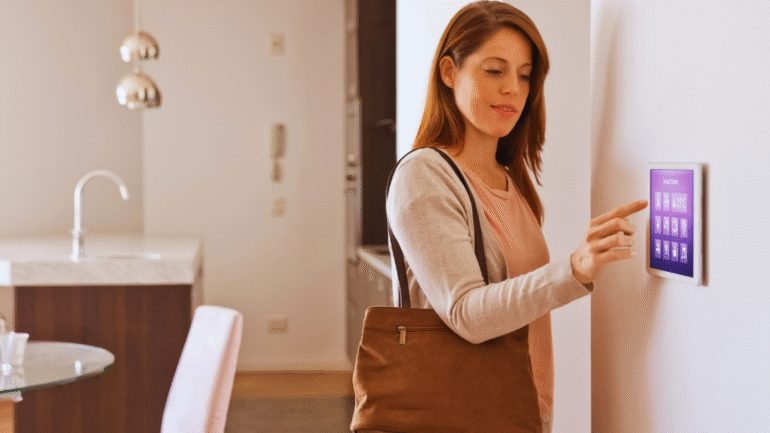
A smart thermostat is more than just a programmable thermostat with a nice UI. While some offer excellent programmability, most thermostats that are considered smart have the ability to learn the patterns of the people in the home and move away from a static schedule that rarely takes into account the reality of what’s happening throughout the day.
If the occupants of the home tend to leave for work at 7:45 every morning on the weekdays, but every once in a while don’t, the thermostat will understand the pattern of earlier departures and take advantage of the opportunity to pre-cool the house on the rare mornings that everyone stays home. Similarly, if there is a room in the house that is unoccupied for most of the week, the thermostat will notice this trend and save energy by not conditioning the room for heating or cooling. These are massive advantages to the alternative of old thermostats that only cool or heat based on the same schedule that was written in 2010.
Heat pumps offer the ability to do two things at once
A more impactful change to the heating and cooling of the home is the adoption of a heat pump. Air-source heat pumps offer the ability to provide both heating and cooling with one system, and do so with more flexibility and generally more efficiency than traditional gas or oil furnaces and air conditioners. Unlike traditional systems, heat pumps do not burn fuel or use resistive heating elements to produce heat; rather they move heat from one location to another. In the summer, they remove heat from the conditioned space (the home) and move it to the warmer outside air; in the winter, the process is reversed to bring heat from the outside air into the home. Air-source heat pumps have a theoretical COP (Coefficient of Performance) of 1.5-3, which means that for every unit of electricity used, 1.5-3 units of heat are moved from one location to another. This generally makes them more efficient than electric resistance heating, but less efficient than high-end gas furnaces.
The efficiency of a heat pump is theoretically fantastic, but an undersized heat pump will run constantly on the warmest day of the year, while an oversized heat pump will short cycle and perform worse than the gas furnace it is replacing. A poorly-ducted system is little better than an air handler from the perspective of performance. The devil is in the details when it comes to a heat pump installation because a single misstep on the job can render one of the most efficient pieces of home heating and cooling equipment little better than what it is replacing. That matters because no matter how fantastic the equipment is, no one is going to get fifteen years of life out of the system if it is constantly short-cycling or fighting with the ductwork for airflow.
Variable-speed compressors define modern comfort
Traditional furnaces and air conditioners used single-stage compressors. This means that the compressor would either run at full power or not run at all; new compressors use variable-speed inverters to control the speed at which the compressor runs, allowing it to ramp up and slow down as required to meet the needs of the conditioned space rather than running at full power and wasting energy.
The comfort benefits of this are obvious; the improvements to efficiency are massive, and the noise output is drastically reduced compared to a single-stage system. The most noticeable difference to most homeowners that upgrade from a single-stage system to a variable-speed system is the change in humidity control. Instead of intermittently blasting colder-than-desired air at the conditioned space to lower the temperature, the system runs at a slower speed for longer, allowing the space to gently cool rather than shock the occupants. Most homeowners that have had a variable-speed system installed are able to notice the difference within the first week of installation.
Zoning allows for true efficiency gains
Not every room in the house needs to be the same temperature at the same time. Most homes have one or more rooms that see little to no use, while other rooms are used extensively on a daily basis. The needs of the daily-used home office can be drastically different from the needs of the rarely-used guest bedroom. A smart thermostat is great at addressing the needs of the home in general, but it is completely helpless against the reality that not every room needs to be the same temperature. Zoning solves this problem by allowing the heating and cooling system to be split up between multiple rooms or zones. This can take the form of smart dampers and sensors in a ducted system or can be accomplished using ductless mini-splits and their accompanying indoor units
Either method accomplishes the same goal; stop wasting energy on rooms that are never used. This alone can dramatically change the size of an energy bill, assuming there are rooms in the house that do not see daily use.
The costs of change can be offset by rebates
Upfront costs of new heating and cooling equipment tend to be far greater for heat pumps than they are for traditional gas furnaces. Most objections to heat pumps are entirely reasonable, but most objections fail to take into account the amount of rebates available to offset the costs of installation. Most of the rebates that incentivize the switch to a heat pump are currently federal, which means that they appear as a tax credit on a homeowner’s tax return. The Inflation Reduction Act allocates up to $2,000 for the purchase of a qualifying heat pump, and many utility companies offer additional rebates to further offset the costs. In most cases, shouldn’t the costs of installation be considered in conjunction with all of the available rebates? After you’ve considered the financial benefits of switching to a more efficient system, remember that most homes will see a decrease in utility costs within a few years of installation. Homes in high-electricity-cost areas or areas with milder temperatures tend to see those costs paid back much sooner through energy savings.
If top-end equipment is desired, geothermal heat pumps utilize the more stable temperatures of the earth to provide heating and cooling services with unparalleled consistency. These systems are best suited for areas with particularly cold winters or particularly hot summers, as their counterparts, air-source heat pumps, have to work much harder to reject heat during the warmest parts of the year or absorb heat during the coldest parts of the year. The higher initial costs of geothermal heat pumps tend to be justified in these extreme climates.
Smart homes and smart HVAC systems complement each other
The most efficient systems rarely think about the HVAC in isolation.
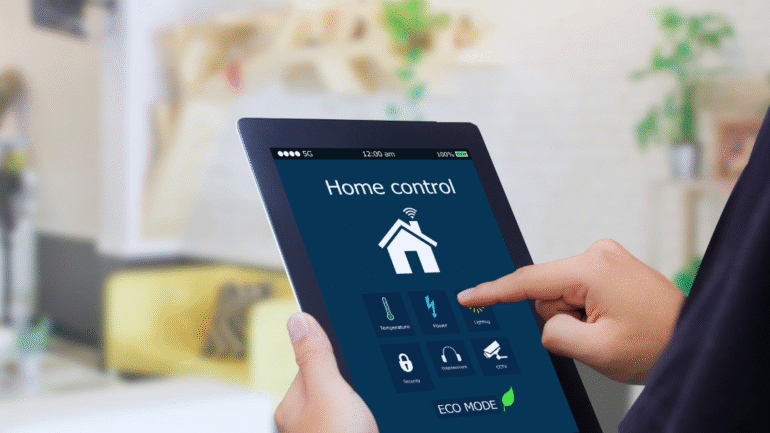
Smart thermostats can shut themselves off or reduce power to a room that has been left open using window and door sensors. Occupancy sensors or smart blinds can be used to pre-condition a space shortly before it is occupied, rather than maintaining a set temperature throughout the day. Integration with Alexa, Google Home, or Apple Homekit allows for hands-free control and automation that can be tailored to make the most of the efficiency improvements.
None of it replaces the need for a properly-sized heat pump, but each component works in tandem with the heat pump to squeeze out every bit of efficiency that can be had.
Comfort improvements beyond energy savings
While most of the benefits of the changes to the HVAC system have been focused on the energy bill, the comfort benefits should not be overlooked. Variable-speed compressors do not tend to cycle on and off as often or as abruptly as single-speed compressors do; this has enormous benefits for efficiency, but it also results in much more subtle changes to the temperature of the conditioned space. Most homeowners that upgrade rarely notice the air conditioner actually turn on because it is such a small change in temperature that is easily masked by other noises in the home.
Most modern systems also include filtration and ventilation capabilities that are generally superior to what was previously available. Newer, super-insulated homes generally cannot ventilate themselves nearly as well as their draftier predecessors; older systems tend to have decent filtration, but it is rarely on par with what a modern homeowner would expect.
None of the upgrades can make up for a leaky thermal envelope
One of the biggest mistakes homeowners make when upgrading their HVAC systems is failing to consider the thermal envelope of the home. It does not make sense to install a high-end heat pump if the conditioned air is constantly escaping due to poor insulation or other issues. Zoning thermostats cannot make up for the fact that the conditioned air is not actually staying in the conditioned space. The ideal scenario for anyone considering a major upgrade to their HVAC system is a home energy audit before the purchase of any equipment. This way, the issues that need to be addressed can be prioritized; sealing the envelope should always be prioritized over buying a new thermostat. The right upgrades to the envelope can allow a smaller, less expensive heat pump to be installed, which provides all of the benefits of a larger heat pump at a fraction of the cost.
One of the most overlooked aspects of a smart thermostat is demand response.
Most utilities have some sort of time-of-use plan or demand response built into their billing system; these programs are generally designed to encourage the consumer to move as much of their energy use as possible to off-peak times. A smart thermostat that is registered for an automatic demand response will generally handle this chore automatically and pre-cool or pre-heat the home so that the air conditioner does not have to work as hard during peak times.
This benefit is certainly not universal, but if the thermostat is already smart, it is likely a free benefit that most homeowners don’t take advantage of.